Easy Reader News reported that Manhattan Beach City Council voted 5-0 against Toni Scott's proposal for Bruce's Beach Park, a bronze figure eight feet tall lifting a circle overhead to frame the ocean. The Cultural Arts Commission had recommended her design, and so had city staff, while the Arts in Public Places Committee had ranked it in its top two. The council ultimately selected a different finalist.
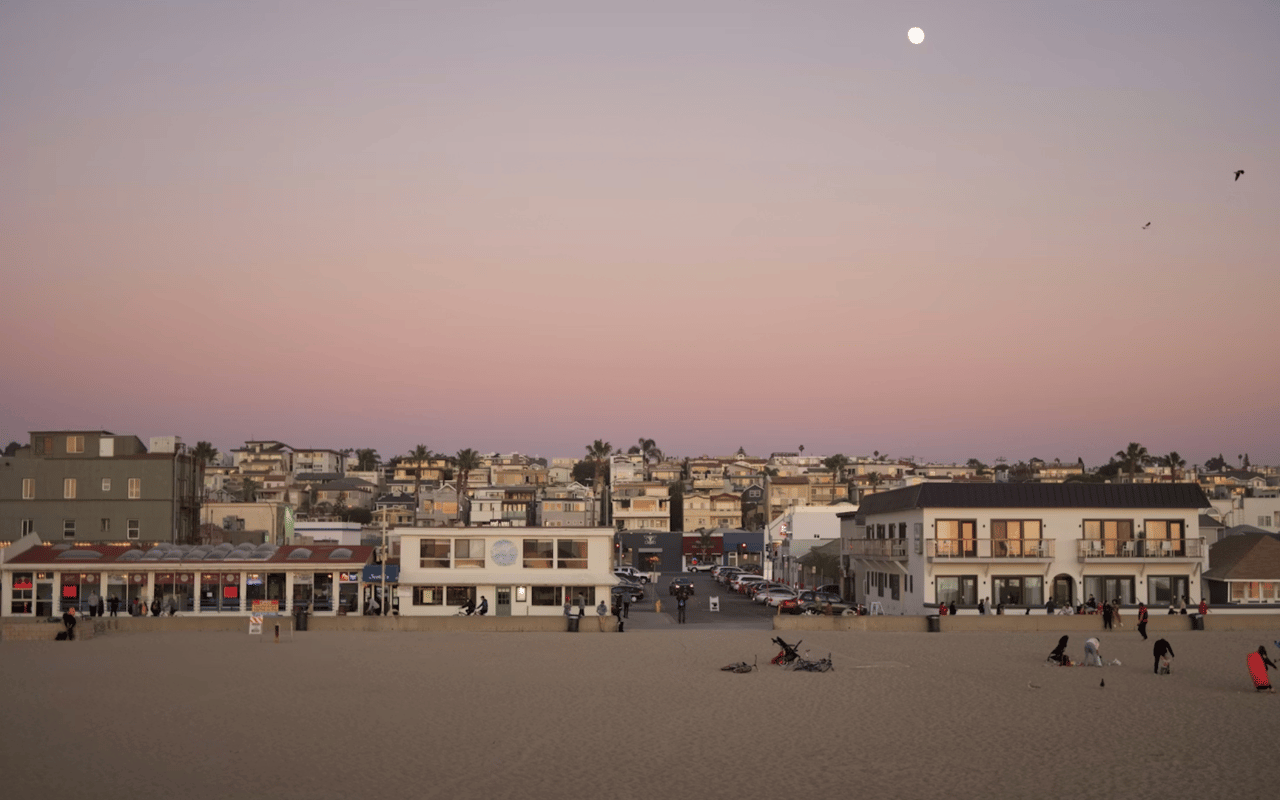
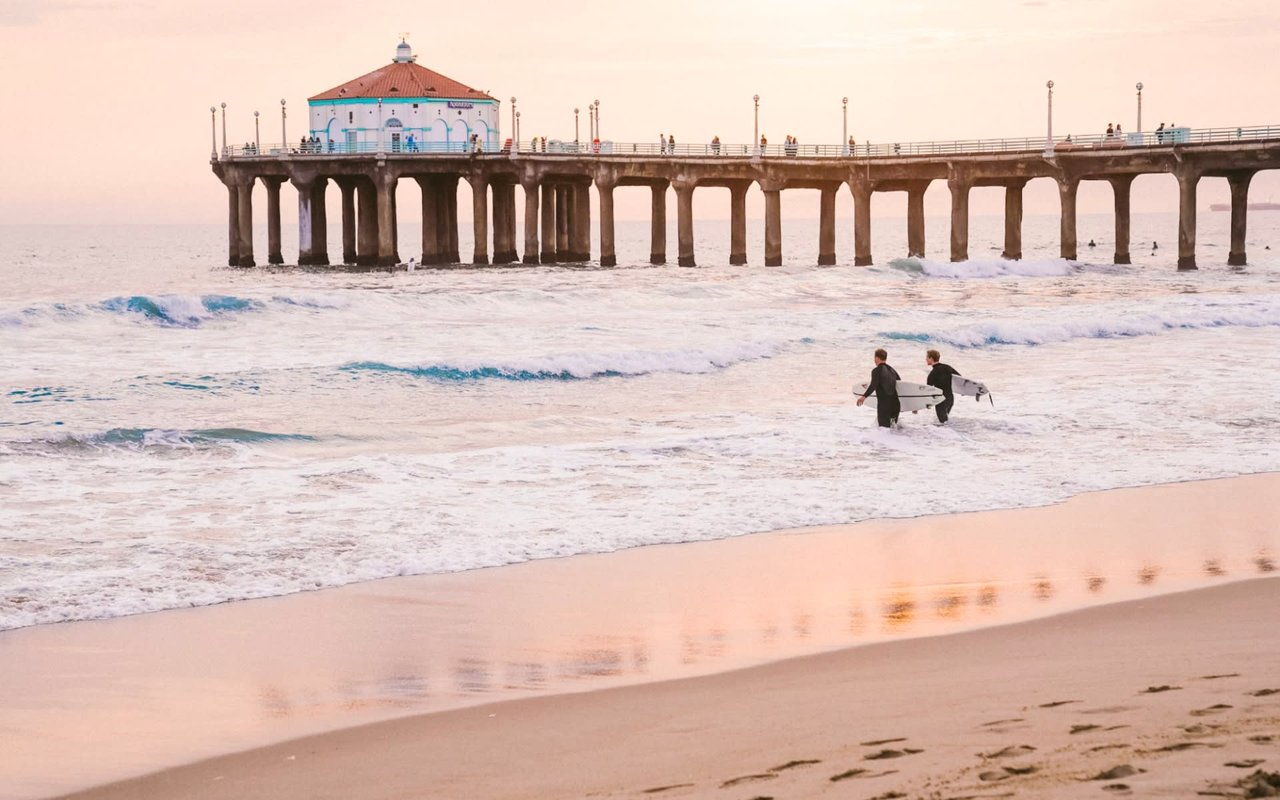
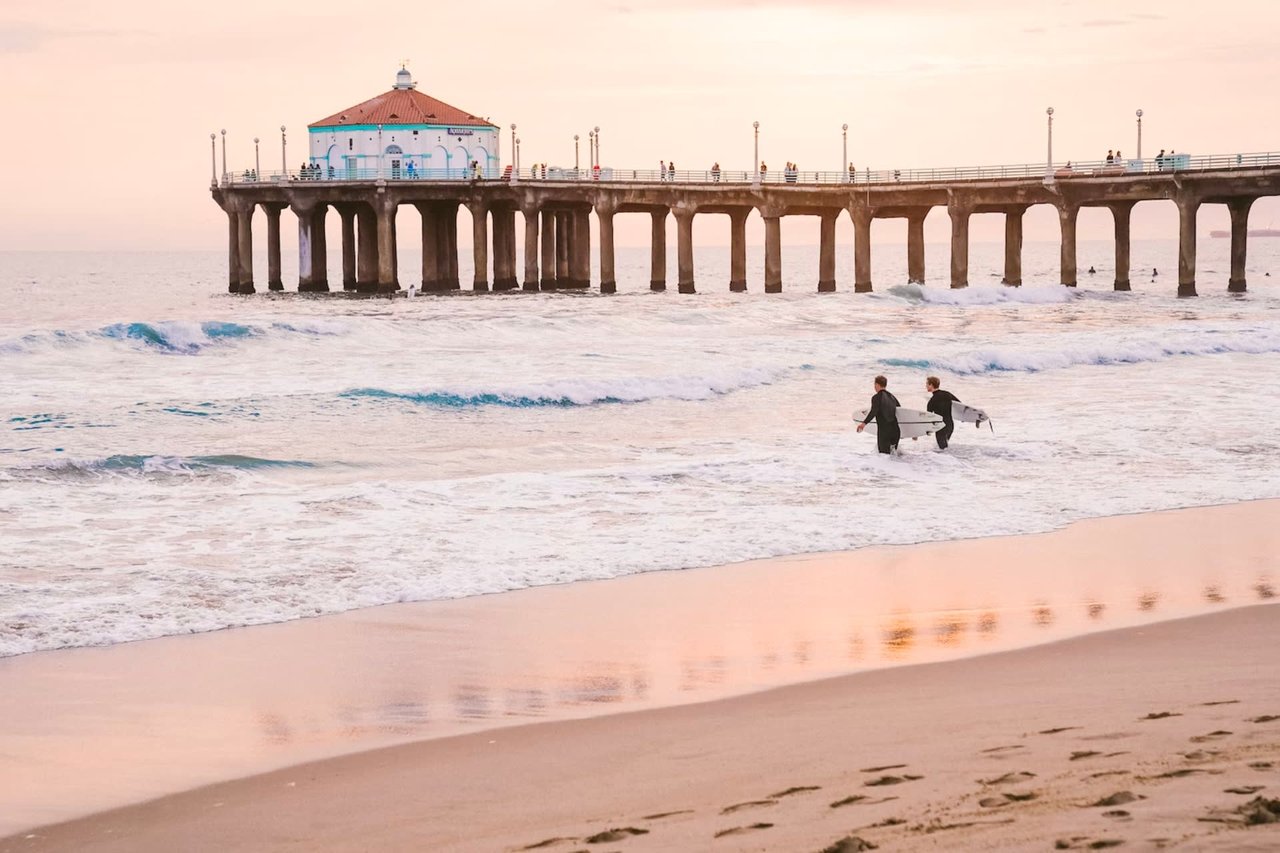
If you walk the Strand past 26th and Highland this winter, you'll see construction fencing around a different piece entirely: an abstracted beach cottage called "Building Paradise," designed by Los Angeles artist April Banks. The council chose it unanimously. The selection process included the public survey and recommendations from city staff and arts groups, followed by the council's final choice.
What's Actually Getting Built
Banks's piece is a literal open house: an exterior facade and an interior facade connected by an archway, built in brick and concrete with mosaic detailing. The city has given it dimensions, 10.5 feet long, 10 feet high, five feet wide, sized deliberately so it reads from the park terraces above and below without blocking the ocean view the site is known for. The materials may shift slightly in the final build to resist graffiti, since anything permanent on a public beachfront park in Southern California has to survive both salt air and foot traffic for decades.
The project carries a $350,000 budget from the city's Public Art Trust Fund, split evenly between the artist's fabrication and oversight work and the engineering, permitting, and installation side. Fabrication and installation are targeted for November 2026, with a public opening celebration planned for December. That puts the unveiling roughly two to three months out from today, which means anyone who uses Bruce's Beach Park on a regular basis will watch this thing go from empty grass to finished structure in real time this fall.
How the Survey Ranked the Finalists
Public input was one part of the selection record. Before the council ever voted, the city ran a public survey on the six finalist proposals. It drew 349 responses, on top of an open house at the Manhattan Beach Library in October that pulled in more than 150 attendees. The survey's top pick wasn't Banks. It was a surfboard-inspired sculpture by artist Nekisha Durrett. Banks ranked second. Scott ranked third.
The professional reviewers were split among their own favorites. The Arts in Public Places Committee had named both Scott and Banks as its top two choices. The Cultural Arts Commission recommended Scott alone, citing the long-term durability of her design. City staff recommended Scott as well. The council weighed a ranked community survey, a committee that put Banks in its top two, and a commission and staff that favored Scott, and it settled on Banks. In The MB News, Mayor David Lesser called the winning design "thoughtful" and said it carried "a sense of history about it." The city reports that Banks's proposal ranked highest across all of its evaluation categories, including historical representation, site compatibility, and durability for permanent outdoor installation.
The open house and the survey were part of the record the council voted on, alongside the committee, commission, and staff recommendations, and the final call rested with the council.
Scott's Proposal and Response
Scott's proposal carried weight beyond craft. Her great-great grandfather, S.B.W. May, owned investment property in Manhattan Beach in the 1920s, during the same period the Bruce family and other Black homeowners were building the resort the park now commemorates. Her grandmother, great-grandmother, aunts, and uncles all visited Bruce's Beach while it operated. Her aunt Theresa, who was married to Bernard Bruce, was Scott's godmother. She had planned to interview her cousins Marcus and Derrick Bruce on camera about the family's history.
Easy Reader News reported that Scott said she felt like a quarterback after the vote. The city is building a public artwork at Bruce's Beach Park, and the council selected Banks's design.
Why This Park Carries This Much Weight
None of this happens in a vacuum, and the park's backstory explains why a single sculpture commission took years and drew this much scrutiny. Bruce's Beach operated as a Black-owned beach resort in the early 1900s until the city used eminent domain to condemn the property in the 1920s, along with several other Black-owned parcels and, notably, twenty-five white-owned lots that sat undeveloped nearby. The city didn't publicly acknowledge that history until 2006, when it named the site Bruce's Beach Park and installed a plaque.
As The MB News reported, the current chapter began building momentum in the summer of 2020. A city task force formed, a history report followed, and in September 2021 Governor Gavin Newsom signed a state bill permitting Los Angeles County to return the county-owned beachfront property to the Bruce family. The county handed over the deed in July 2022 and installed its own plaque on the Strand detailing the history. Then, in 2023, the Bruce family sold the property back to the county for $20 million.
The Public Art Trust Fund's $350,000 for a park sculpture was actually allocated back in March 2021, before any of that land transfer happened. The city's first attempt at a request for proposals in 2023 didn't produce anything feasible, so it restarted the process as a request for qualifications in March 2025, this time drawing 115 applicants. Six finalists were chosen, each paid a $1,500 stipend to develop a full proposal, which is how the project arrived at the open house, the survey, and the council's final selection.
What to Watch For This Fall
If Bruce's Beach Park is part of your regular loop, whether that's a morning walk down the Strand or a stop with out-of-town guests who want to see the plaque, expect the site to look different by December. The archway structure is designed to be visible from the park terraces on both sides, so it won't be tucked into a corner the way some public art gets treated. It's built to be looked at from more than one angle, which was part of what the council cited in its decision.
The finished piece will be on view once the fencing comes down.
Bruce's Beach Park has changed more in the last five years than in the previous fifty, and this sculpture is only the latest layer. If you want to keep track of what else is shifting in the Sand Section before it becomes a headline, Jen Caskey Group pays closer attention to this stretch of Manhattan Beach than most.